The Three-Day Right to Cancel Most Homeowners Never Hear About
Sign a deal at your kitchen table and federal law gives you until midnight on the third business day to undo it.
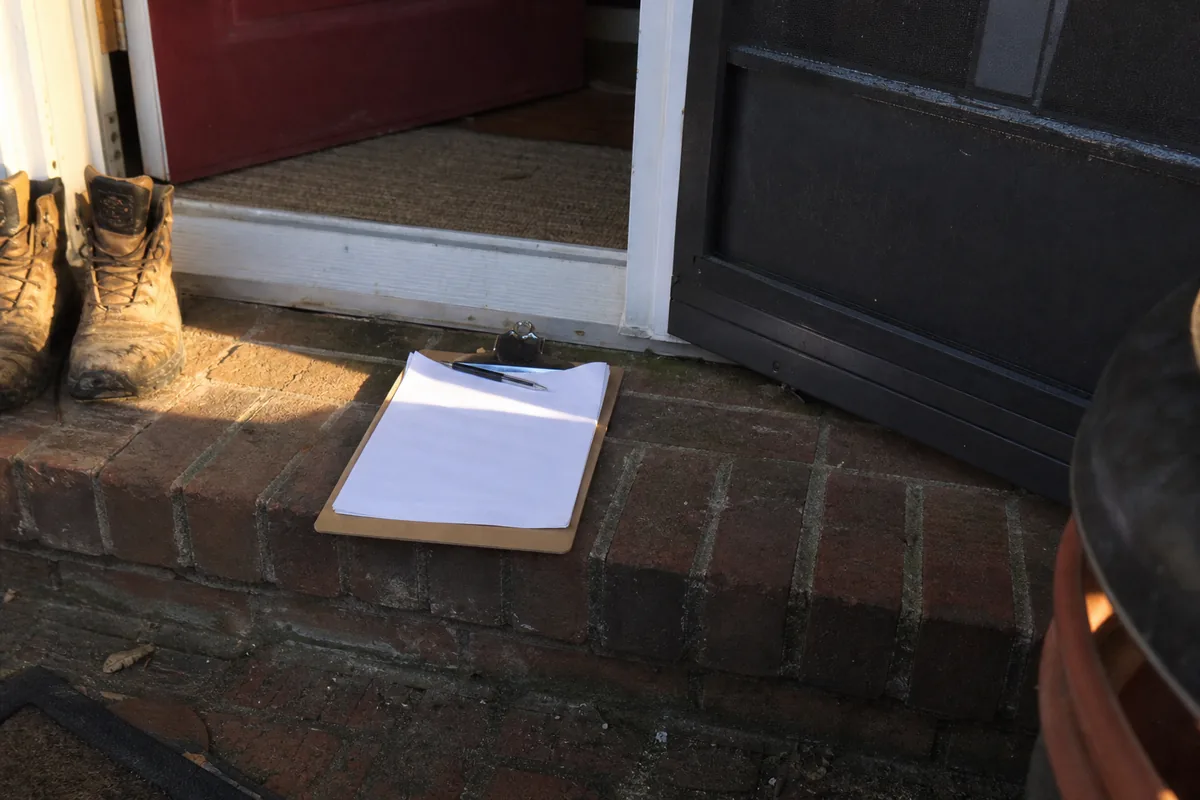
A salesperson knocks. An hour later there is a signed contract on the kitchen table for new windows, a new roof, or a water treatment system.
Federal law anticipated that exact situation.
The Federal Trade Commission's Cooling-Off Rule "gives you three days to cancel certain sales made at your home, workplace, or dormitory, or at a seller's temporary location."
Three business days, and the clock is specific
The right runs "until midnight of the third business day after the sale."
Business days matter here. Saturdays count. Sundays and federal holidays do not. A contract signed on a Thursday therefore usually runs to midnight on Monday, not Sunday.
That is a real window, but it is a short one. It is also the reason a certain kind of salesperson pushes hard for a signature tonight rather than a decision next week.
Where the rule applies
The place the deal happens is what matters, not the product.
The rule covers sales at your home, your workplace, a dormitory, and at a seller's temporary location. The FTC lists those as a "hotel or motel room, convention center, fairground, or restaurant."
So a deal signed at your kitchen table is covered. The same deal, signed at the company's own showroom, is not.
Where it does not apply
The exclusions are as important as the rule.
Not covered: real estate, insurance, securities, and motor vehicles sold at a temporary location where the seller has a permanent place of business. Also not covered: anything bought online, by mail or by telephone, and anything bought at the seller's permanent business location.
There are dollar floors too. The rule excludes sales under $25 at a home, and under $130 at a temporary location.
What the seller must hand you
This is the part most people never check, and it is the easiest thing to verify before anyone leaves.
The seller must give you two copies of a cancellation form, and a copy of your contract or receipt. That paperwork has to show the seller's name and address, state your cancellation rights, be dated, and be "in the language used during the sales presentation."
A seller who does not provide those forms has not met the rule. If a contract arrives with no cancellation form attached, that absence is itself the warning sign.

How to use the three days
Treat the window as thinking time, not paperwork time.
Get a second quote. Three days is enough to have one other company look at the same job. A price that only makes sense tonight rarely makes sense on Wednesday.
Check the company exists properly. A permanent business address, a licence where your state requires one, and insurance.
Read what you actually signed. Specifically the payment schedule and anything describing work that is not clearly defined.
Cancel in writing, and keep proof. Use the form you were given. Send it inside the window. Keep a copy, and keep a record of when it went.
Why door-to-door work is where this matters
Most home improvement is not sold this way. You notice a problem, you look for someone, you invite them in. The decision starts with you.
Door-to-door selling reverses that. The seller chose the house, the moment, and the pitch. The homeowner is reacting rather than deciding, often to a problem they had not thought about an hour earlier.
That reversal is what the rule is built around. The three days exist to put a normal amount of thinking time back into a decision that was deliberately compressed.
It is also why roofing, windows, water treatment and driveway work show up in this context so often. They are expensive, hard for a homeowner to price from memory, and easy to make sound urgent.
What the rule does not do
It is worth being precise about the limits, because the rule is narrower than people assume once they hear about it.
It is not a general right to change your mind about any contract. A deal signed at the company's own premises is outside it entirely.
It does not cover work you sought out and arranged yourself in the ordinary way, whatever it cost.
And it does not fix bad work. The rule is about how and where a sale was made, not about the quality of what gets built afterwards. A job already done badly is a different problem with different remedies.
The underlying point
The Cooling-Off Rule exists because a sale made in your own home is different from one you went out to make. The seller chose the moment; you did not.
Three days is the law's way of handing that choice back. It only helps the people who know the window is there while it is still open.