How Much Water a Leaking Faucet Really Wastes
Nine percent of homes are losing 50 gallons a day. Almost none of them know it.
Part of our guide to what a home's bills are really made of
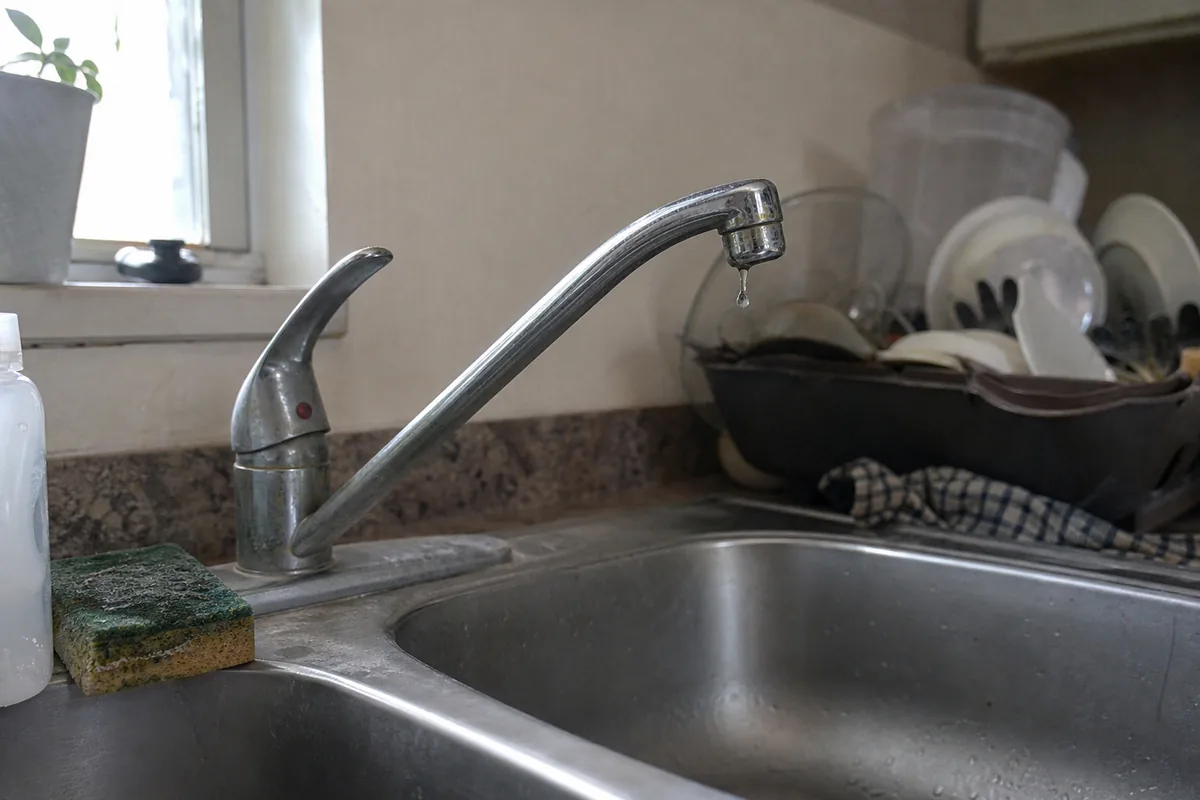
A dripping faucet looks like a small problem. The arithmetic says otherwise.
The EPA's WaterSense program tracks household leaks. Its finding: "The average household's leaks can account for more than 9,300 gallons of water wasted every year."
That is the average home. Not the worst one.
Nine percent of homes are much worse
The EPA also reports that "nine percent of homes have leaks that waste 50 gallons or more per day."
Fifty gallons a day is not a drip. That is a bathtub, every day, running into the ground or the sewer, on a bill somebody pays.
Across the country it adds up to what the agency calls "nearly 1 trillion gallons of water annually nationwide."
Why nobody notices
Leaks that announce themselves get fixed. Leaks that stay quiet are the expensive ones.
A toilet that runs intermittently makes a sound for ten seconds and then stops. A supply line weeping behind a wall shows nothing until the paint changes. An irrigation valve that does not close fully drains into soil that looks the same either way.
None of those produce a puddle. All of them produce a bill.
The toilet is usually the culprit
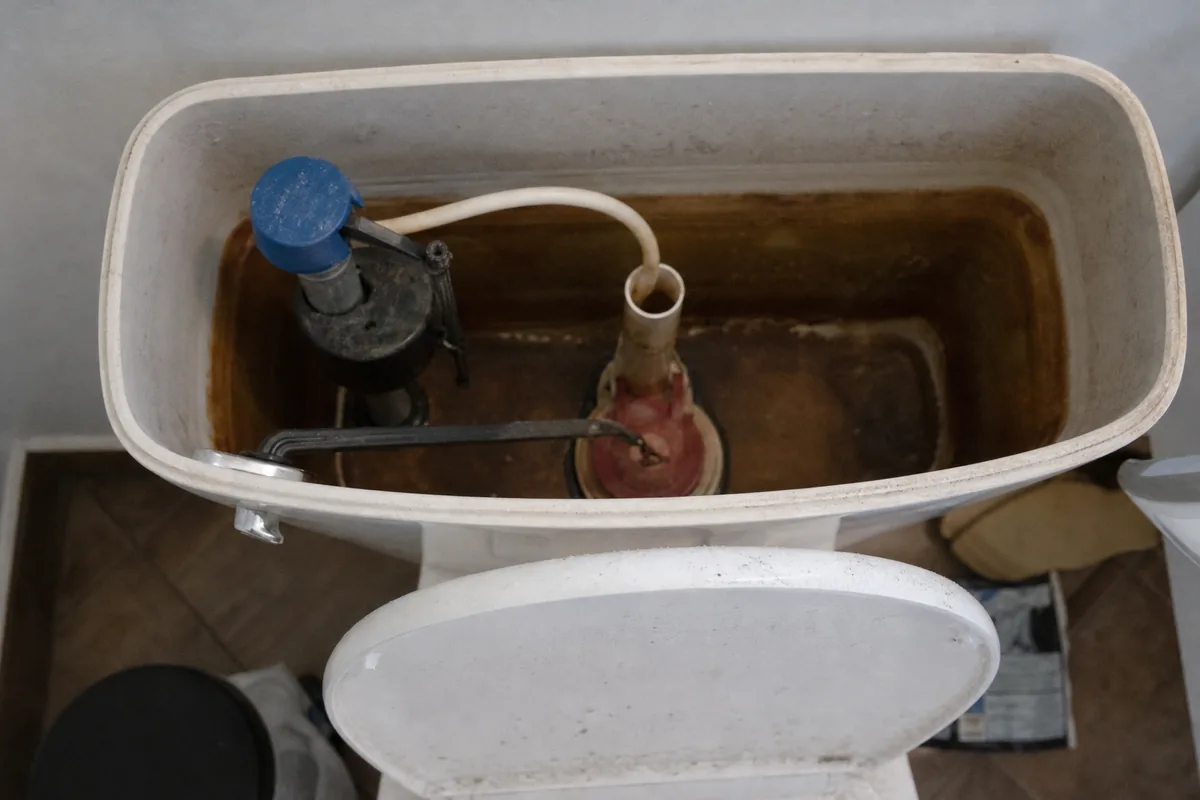
In most homes the biggest silent leak is a toilet flapper. It is a rubber part that hardens with age and stops sealing. Water then trickles from the cistern into the bowl continuously.
There is a simple test. Put a few drops of food coloring into the cistern, leave it for ten minutes without flushing, and look in the bowl. Colour in the bowl means the flapper is leaking.
The part itself is one of the cheapest in the house.
The meter test settles it
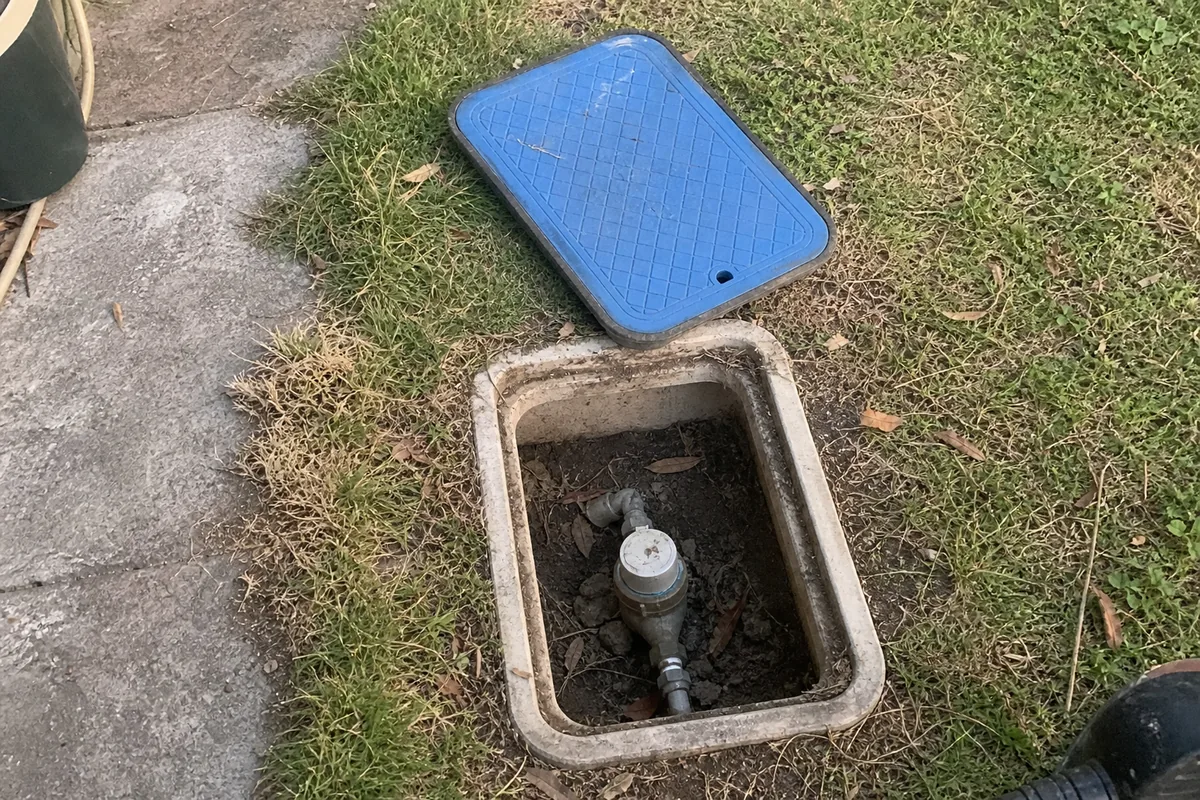
If you want to know whether the house is leaking at all, the water meter will tell you.
Turn off every tap and water-using appliance. Find the meter and note the reading. Wait two hours without using any water. Read it again.
A number that moved means water went somewhere. That is the whole test.
Many meters also have a small triangular or star-shaped dial that spins when water is flowing. If it turns while nothing in the house is running, something is leaking right now.
Where leaks usually hide
Four places account for most of what the EPA is describing.
The toilet. The flapper, as above. The most common and the cheapest to fix.
Faucet washers. The visible drip. Annoying, and the easiest to ignore precisely because you can see it and have decided it is small.
Supply lines. The flexible hoses feeding a sink, a toilet or a washing machine. These weep slowly at the connection and sit inside a cabinet where nobody looks.
Irrigation. A valve that does not close fully, or a cracked head. This one leaks into soil, which hides the evidence completely.
When it stops being a washer
Some leaks are not a parts problem.
Some signs point at a pipe rather than a fixture. Water showing up on a ceiling. A wall that stays damp. A floor that has started to lift. A meter that spins fast with everything in the house switched off.
The same is true of a water heater with a wet base. The tank itself may be failing, and that is a replacement rather than a repair.
The dividing line is simple enough. A fixture leak gets worse slowly and costs water. A pipe leak gets worse quickly and costs building materials.
What fixing it is worth
The EPA puts the payoff plainly: "Fixing easily corrected household water leaks can save homeowners about 10 percent on their water bills."
Ten percent is not a dramatic number. It is also permanent, it costs very little to capture, and it compounds every month you do not fix it.
The repairs behind that figure are mostly small — a flapper, a washer, a supply line, an irrigation head. These are the jobs a homeowner either does in twenty minutes or pays a plumber an hour for.
The expensive version is the one you leave alone for a year.